The needs and interests of people impacted by male contraceptive methods are diverse, and they evolve over time. "Personas" help understand and design for those interests and needs.
Personas* are incredibly useful tools in user-centered design, marketing, and other disciplines focused on understanding customer needs and behaviors. A persona is a fictional character created to represent a particular user type, providing insights into how such a user might interact with a site, brand, or product. These representations are especially valuable during the ideation phase of product development. They allow for the extrapolation of user preferences, guiding product attributes and reducing ambiguity in the design process.
In the realm of male contraception, persona generation holds immense potential. With limited contraceptive options available for men and decades of insights from the development of female contraceptives, creating personas for this field could lead to significant breakthroughs. Personas help align new contraceptive methods with user preferences, life stages, and reproductive needs, ultimately contributing to a more inclusive, responsive product design process.
In the realm of male contraception, persona generation holds immense potential. With limited contraceptive options available for men and decades of insights from the development of female contraceptives, creating personas for this field could lead to significant breakthroughs. Personas help align new contraceptive methods with user preferences, life stages, and reproductive needs, ultimately contributing to a more inclusive, responsive product design process.
Male Contraception & Personas
Male Contraception "Users"
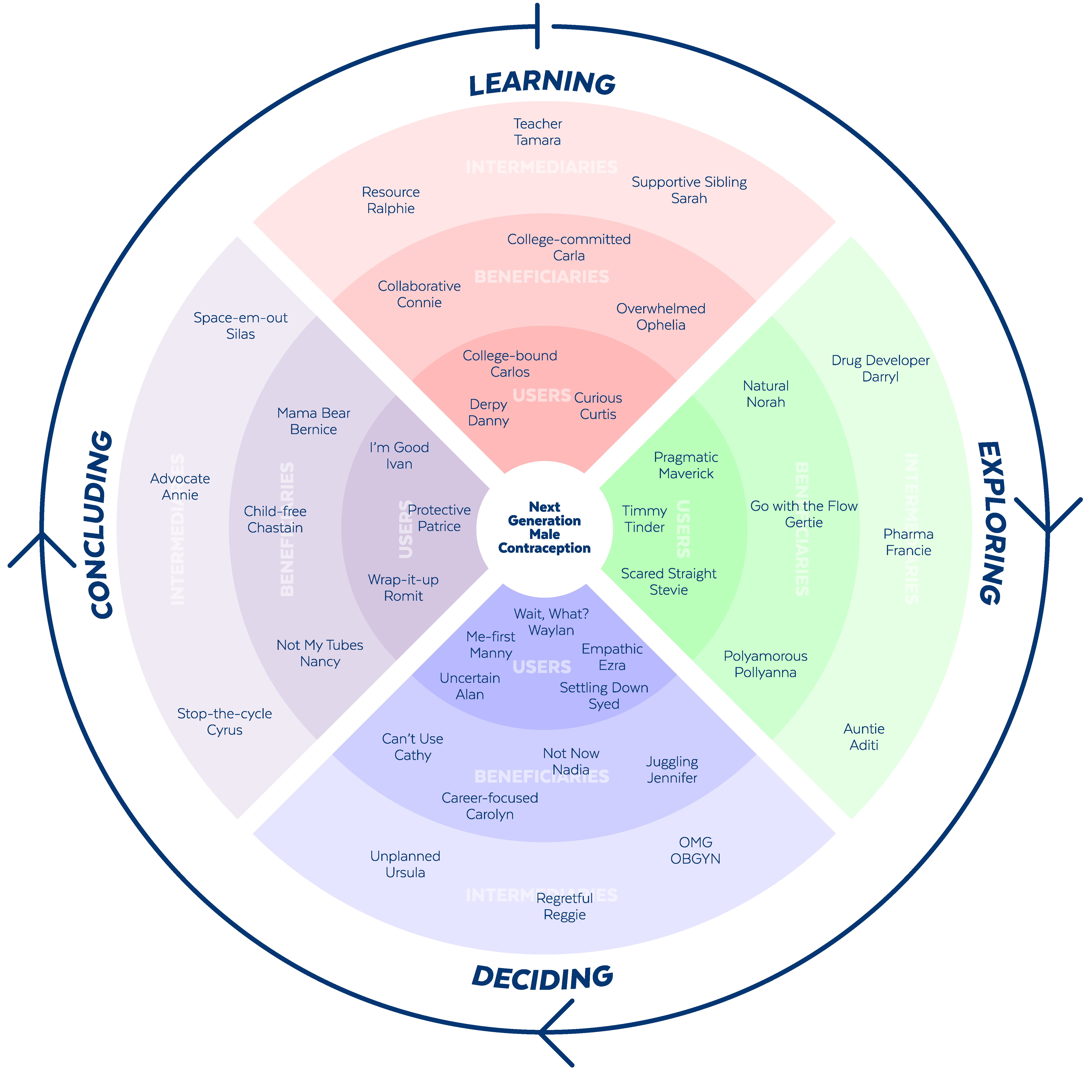
Male contraception also presents an interesting opportunity for persona generation and use given its universal applicability and value: everyone benefits from new contraceptive methods. It is also a unique use case for personas given the expanded understanding of genders in our increasingly non-binary world. Egg and Sperm producers can utilize new male methods to better manage their family planning needs. As we work towards creating a world with reproductive autonomy for all, it is critically important that the design of new contraceptive methods take into consideration as many users, beneficiaries, and intermediaries as possible.

USERS
This group is defined as the individuals that will take or utilize the next generation of contraceptives designed for men. |

BENEFICIARIES
This group includes individuals who will benefit from the next generation of male contraceptives without having to take or use these products themselves. |

INTERMEDIARIES
This group is composed of individuals that will neither take, nor directly benefit from the next generation of male contraceptives, but still have a vested interest in ensuring their development. |
Male Birth Control Persona Stakeholder Groups
Men's Reproductive Journey
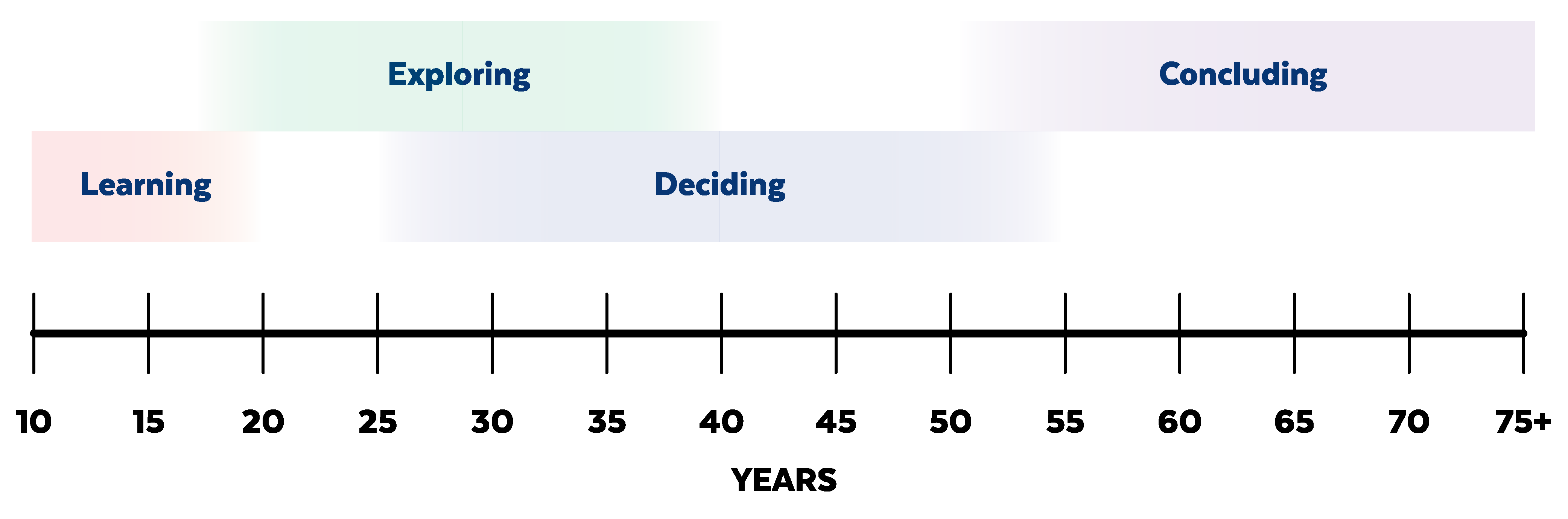
Much like women’s experiences with contraception, MCI anticipates that men's preferences and needs regarding contraceptive options will evolve throughout their lives. These preferences are shaped by lived experiences: for instance, a 55-year-old man who has completed his family may have vastly different contraceptive needs than an 18-year-old who is just beginning to think about their reproductive journey.
To address these varying needs, we’ve mapped out the different stages of a man’s reproductive life, allowing us to better define the potential personas of future male contraceptive users. This approach also considers the potential beneficiaries and intermediaries who may influence decisions at each stage. Through this lens, we aim to capture the evolving needs of male contraceptive users, ensuring that new solutions are relevant and adaptable to these distinct life phases.
To address these varying needs, we’ve mapped out the different stages of a man’s reproductive life, allowing us to better define the potential personas of future male contraceptive users. This approach also considers the potential beneficiaries and intermediaries who may influence decisions at each stage. Through this lens, we aim to capture the evolving needs of male contraceptive users, ensuring that new solutions are relevant and adaptable to these distinct life phases.

LEARNING
The initial stage, this is when a young man begins thinking about sex and establishes the foundation of their understanding of sexuality and relationship dynamics. |

EXPLORING
The next stage involves a man getting to know their sexuality and experimenting with sex irrespective of relationship status and without a focus on conceiving a child. |

DECIDING
The third phase finds a man at the juncture in life where he is considering life events like getting married and having children, or not. |

CONCLUDING
The final stage, this is when a man has ultimately completed their reproductive journey, whether that includes fathering children or not. |
Male Birth Control Persona Life Stages
Using the Personas
Personas are fictional representations of different types of individuals who may use or be impacted by a product. These avatars allow for a deeper understanding of user needs, experiences, behaviors, and goals by helping designers and developers empathize with diverse perspectives. To make personas as realistic and meaningful as possible, it's essential to identify and expand on user characteristics, grounding them in real-world behaviors and insights.
To help you integrate personas into your ideation process, we’ve created a resource page with various games, activities, and workshop agendas designed to spark creativity. We encourage you to try these out and invite you to share any feedback, questions, or outputs from your persona design sessions with us! Your input is valuable as we work together to refine these tools and foster innovation.
To help you integrate personas into your ideation process, we’ve created a resource page with various games, activities, and workshop agendas designed to spark creativity. We encourage you to try these out and invite you to share any feedback, questions, or outputs from your persona design sessions with us! Your input is valuable as we work together to refine these tools and foster innovation.
(Please note: there are many different ways that one can utilize personas in ideation activities, and we encourage everyone to explore as many different approaches to using them as possible. Organizations like Quicksand, Interaction Design Foundation, Open Design Kit, IDEO, Development Impact & You, Session Lab, and others are great resources for inspiration on how to utilize design thinking and personas, so please be sure to seek out additional information to help guide your work.)
* - Disclaimer: The development of these personas was conducted as a design exercise. The foundation of the exercise is the qualitative understanding of the male contraception ecosystem that MCI has developed through our work. We have engaged with stakeholders that we feel are a holistic representation of this ecosystem: researchers, funders, regulatory agencies, government officials, product developers, marketers, students, parents, advocates, potential users, and the general public in general. The following is intended to be provocative. Our hope is that this will catalyze conversations that help elucidate the male contraception field, and that these discussions afford us all the opportunity to understand and imagine who will use, benefit from, and advocate for male contraceptive methods.